

Our
Puppetry
What sets No Strings apart is that children and young people are not watching adults perform. They learn to become puppeteers themselves, taking on characters, making choices for them and creating stories together. The learning is something they actively make rather than something delivered to them.
We use different forms of puppetry depending on the story, the setting and the age of the participants.
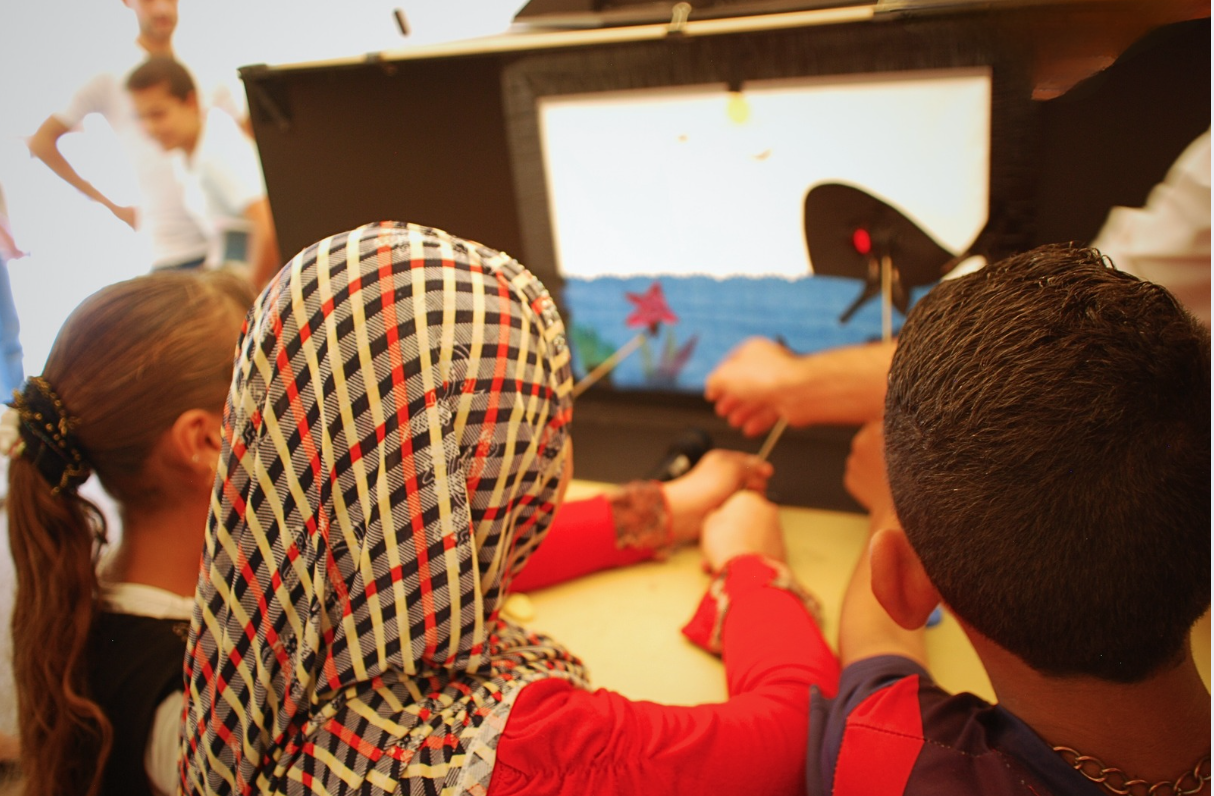
Big-mouth puppets are immediate, lively, warm and characterful. Shadow puppetry lets us stand further back and look at bigger events from a wider perspective, which can be especially useful for themes such as disaster risk reduction. Tabletop puppetry is especially intimate and collaborative: three people work closely to bring a single character to life, creating a strong sense of shared attention and connection.
Each form gives children and young people the freedom to be someone else for a while. Behind the puppet they can say things, try things out and explore difficult ideas without everything having to belong to them personally.
Big Mouth Puppetry

Big mouth puppets are versatile and engaging, making them a central part of many No Strings sessions. Through a fun series of drills and activities, facilitators can support children and adolescents to become puppeteers themselves, working together to create characters and stories that bring ideas, choices and challenges to life.
A puppet does not have to represent a person or creature. It might embody an emotion or feeling, giving shape and voice to something that can otherwise be difficult to express. It can even speak for something that normally has no voice at all. Characters such as Mr Poop and Madam Mosquito allow health and hygiene messages to be explored through humour, personality and story.
Big mouth puppets gives participants the freedom to become someone different from themselves. A character might be another gender, or someone they fear, distrust or see as different. Taking on that role creates an opportunity to see a situation from another point of view, explore different motivations and, perhaps, step into another person’s shoes.
-
![]()
School boys with puppets, Kenya.
-
![]()
Tackling the toilet tissue conversation.
-
![]()
Poop puppets from re-useable bags.
-
![]()
It appeals to younger children …
-
![]()
adolescents …
-
![]()
… and adults!
-
![]()
Rohingya volunteer and frog.


Shadow Puppetry

Shadow puppetry dates back more than 2,000 years, with roots in countries including China, India, Indonesia and Turkey. It can be visually intricate, using light, colour and a wide range of effects, or remarkably simple.
Working behind a screen, participants bring characters and stories to life together. Hidden from the audience gives performers a different sense of freedom to experiment, express ideas and explore situations through the characters they create.
Shadow puppetry depends on teamwork, timing and communication. Groups develop and perform their own stories, interpreting issues from their own perspective and sharing their ideas with others. Through questions and feedback from their peers, they can reflect on what their characters did, consider different choices and reshape what happens next.
-
![]()
Iraq. An under-the-sea story about compromise and friendship.
-
![]()
Madagascar. Community shadow story, environment.
-
![]()
Rohingya children recreate a scene from The Butterfly.


Tabletop Puppetry
The idea of several puppeteers working together to bring a single figure to life has a long tradition. In Japan, Bunraku developed into an extraordinary theatrical form in which three puppeteers work in close coordination to animate one character.
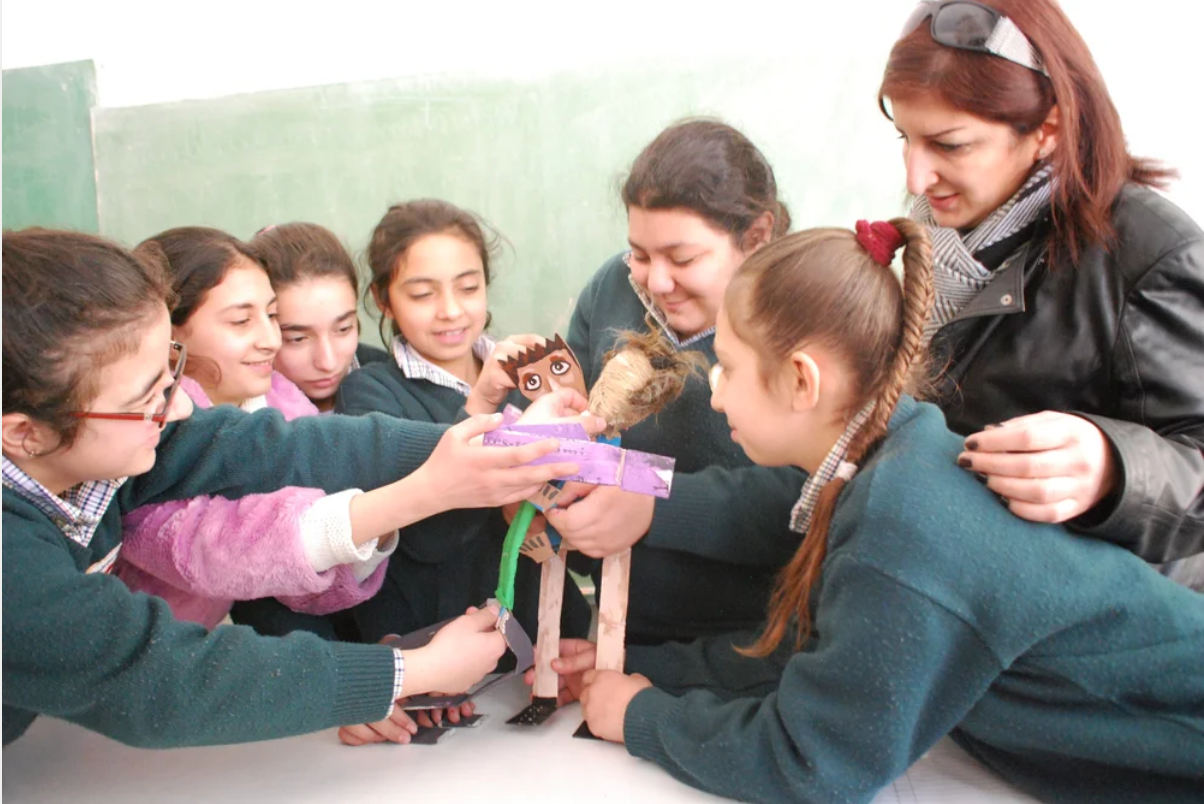
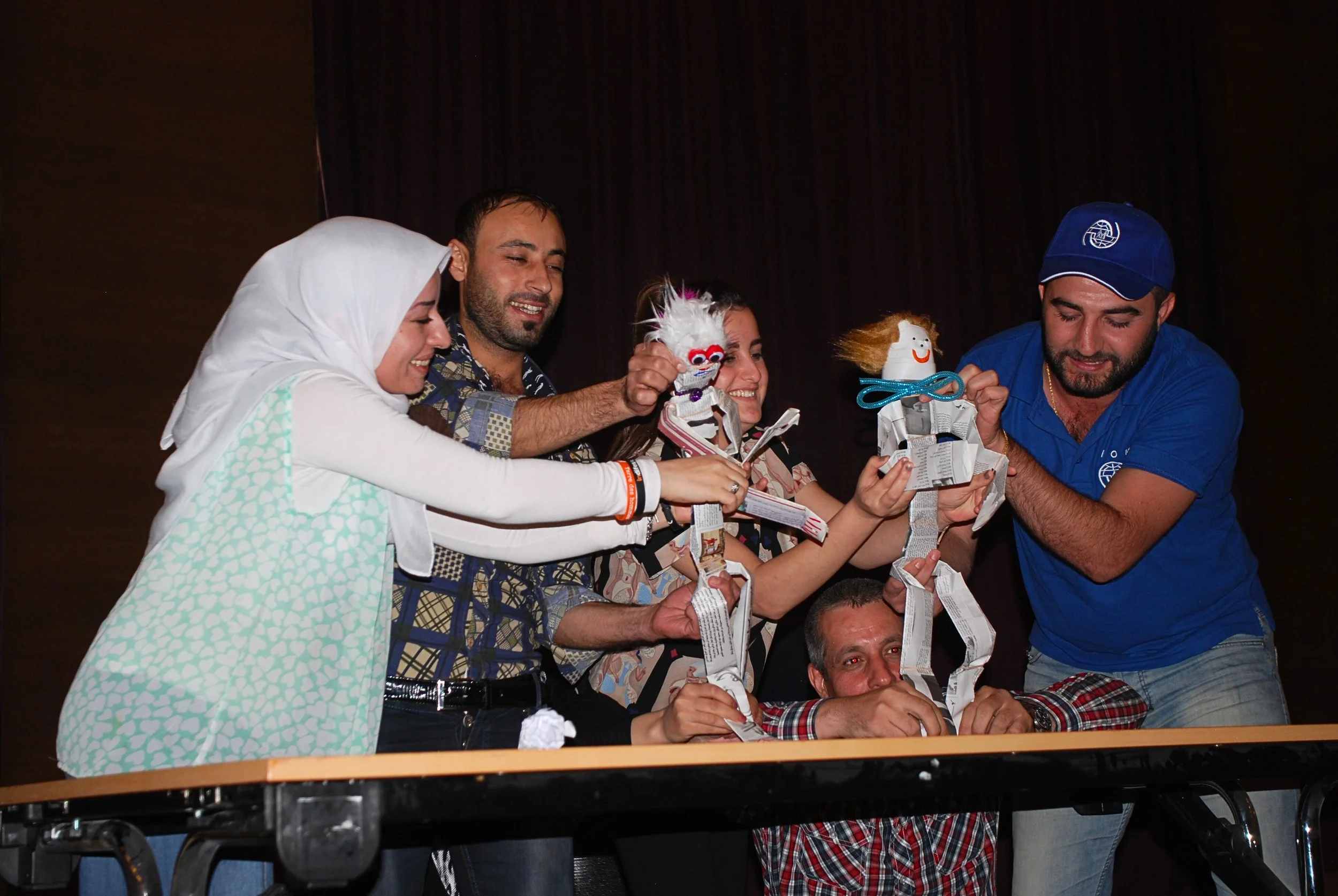
In No Strings tabletop puppetry, three participants similarly work together to manipulate and perform a single upright puppet. No one person is responsible for the character. Its breath, movement, focus and responses emerge through collaboration, helping participants move beyond self-consciousness as they express themselves through the puppet together.
The form can be very simple. A powerful character can be created from little more than a few sheets of newspaper, yet it is capable of expressing complex emotions and relationships through the way it moves, reacts and connects with others.
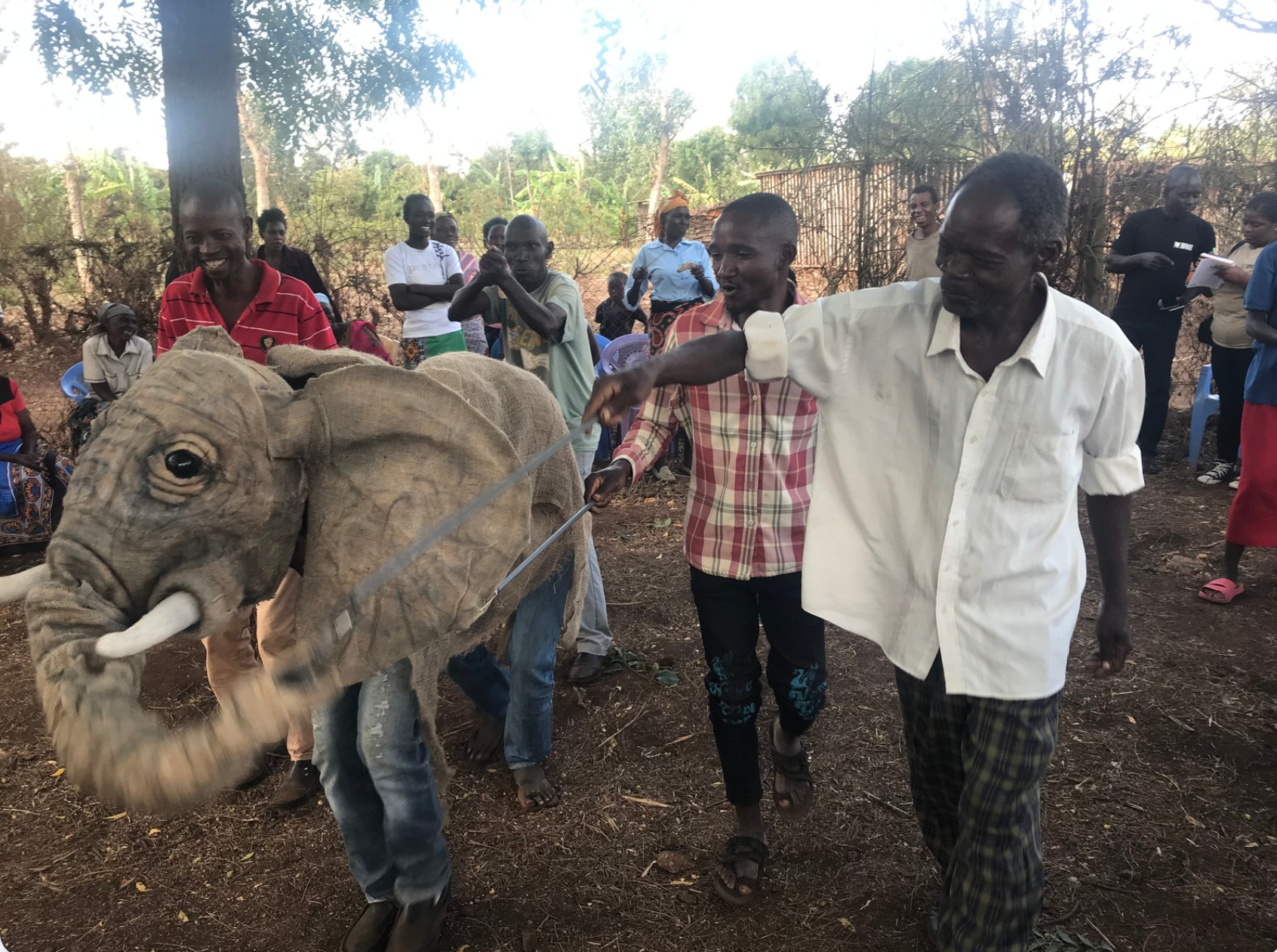
The same principle can also work on a much larger scale. For our programme with the Born Free Foundation, we created a huge elephant puppet, bringing community members together around a character whose size and presence made it impossible to ignore. Whether the puppet is made from newspaper or built on a much larger scale, the effect comes from the same thing: several people working together until the object between them appears to think, feel and come alive.
-
![]()
Beirut. Children make a story about friendship.
-
![]()
Game of football. Training session, Bangladesh.
-
![]()
Iraq. Six puppeteers and two tabletop puppets.
-
![]()
A stunning puppet made by facilitators in Egypt.


Group Models

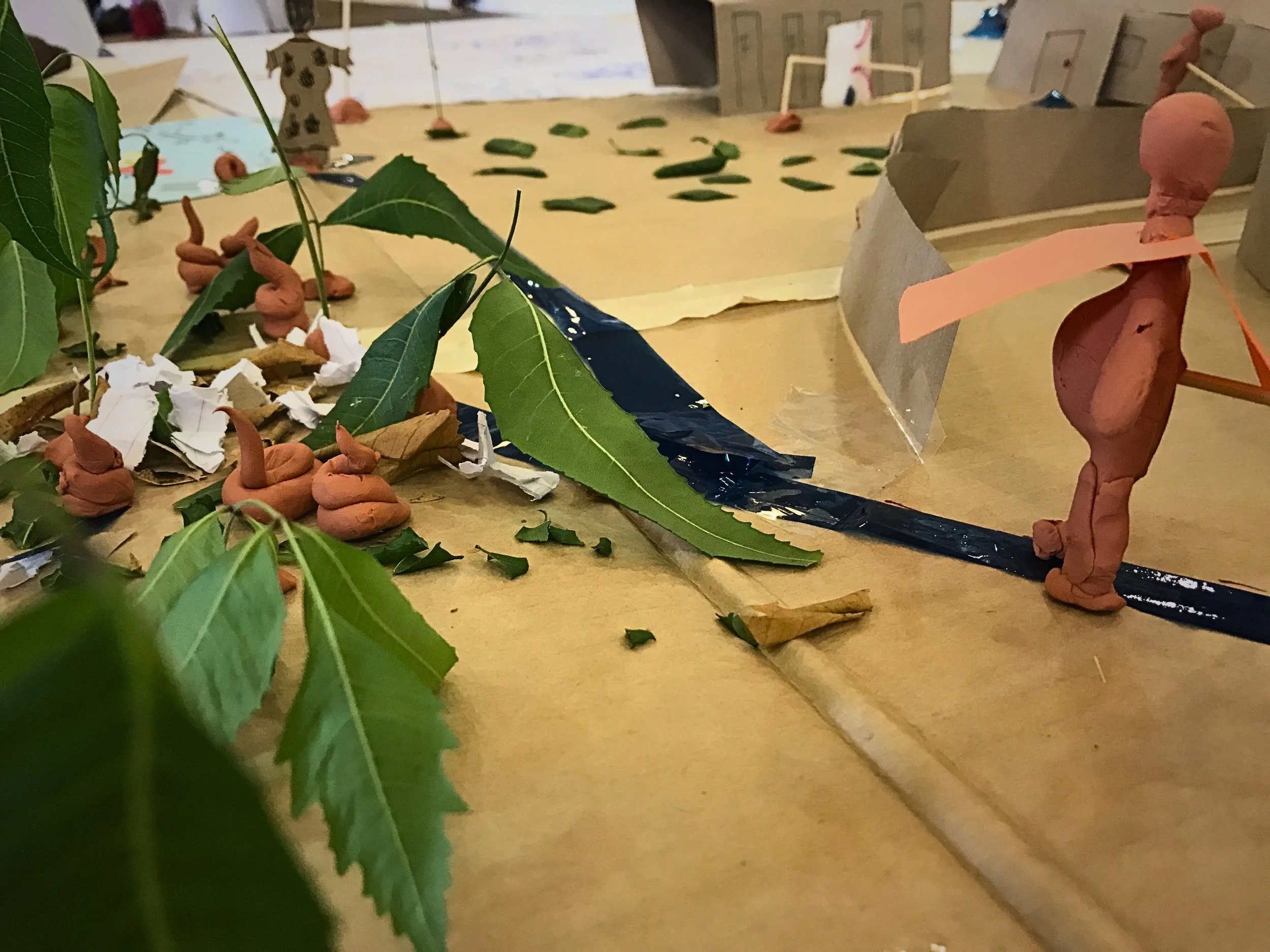
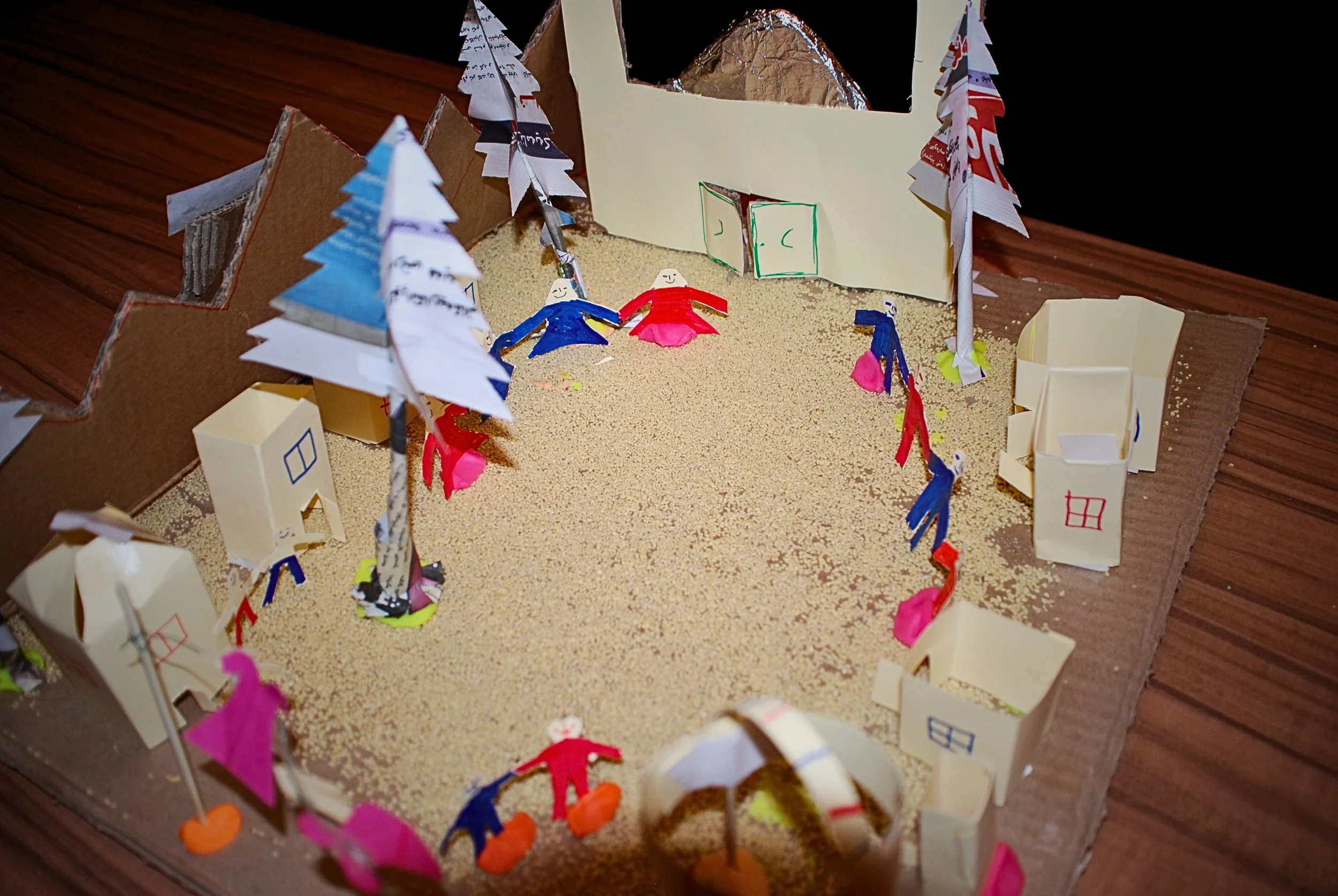
Group models give participants a way to step back and look at a situation together. By building a shared representation of a community, environment or problem, groups can explore risks and vulnerability, and the connections between human behaviour, health, safety and wellbeing.
Because participants have created the model together, there is a natural desire to explain it, discuss what is happening and consider what might need to change.
Models can also be used to explore more complex issues in protection and peace-building programmes, helping groups examine relationships, different perspectives and the factors shaping a situation without requiring anyone to speak directly about their own experience.
-
![]()
DRR. A community model highlights flood risks in cyclone season, Madagascar.
-
![]()
WASH. A pregnant woman and open defecation site, Tanzania.
-
![]()
PEACE. Our film setting reimagined as harmonious, Iraq.

FIND OUT MORE
OUR STORY
How an old puppet called Seamus led to an international creative collaboration
OUR PUPPETRY
Why puppets create space for difficult conversations and behaviour change
OUR FILMS
Developed with leading members of the original Muppet Show creative team
OUR TEAM
The artists, trainers, and trustees behind the work
OUR METHODOLOGY
The No Strings Method: how film, puppetry and participation come together