

PSYCHOSOCIAL
SUPPORT
Children affected by conflict or disaster may experience fear, anger, grief, uncertainty or withdrawal. No Strings programmes give them practical, playful ways to build calm and confidence, connect with others and explore difficult feelings without being asked to talk directly about what has happened to them.
Puppetry creates a safe distance. Feelings can belong to a character rather than the child, while breathing, movement and focus are woven into the practical work of bringing that character to life. Simple ways of slowing the breath, grounding attention and finding steadiness become linked to memorable actions, making them easier to practise and recall.
Stories give children somewhere to use these skills. Characters face problems, make choices, ask for help and try different responses. As they bring their stories to life, children can experience themselves as capable too: able to make choices, try something different and see that difficult feelings and situations do not always have to stay the same.
Where This Work Has Been Used
No Strings psychosocial support programmes have been used with children and young people affected by conflict, displacement and disaster in Haiti, the Middle East, South Asia and refugee settings.
Recent work with Sudanese refugee children in Egypt combined participatory puppetry with breathing, grounding, movement, emotional awareness, cooperation and story-making, helping children practise simple coping strategies and build confidence in using them.
Programmes can be adapted for different ages and settings, including schools, child-friendly spaces and community programmes, and can sit within wider education, protection and psychosocial support work.
Our PSS Films
Films used in our psychosocial support programmes include Out of the Shadows, The Magic Heart, The Butterfly and The Corner Frog. Each offers a different route into experiences such as fear, grief, withdrawal, anger, connection, hope and recovery.
OUT OF THE SHADOWS: CLIP
Psychosocial Support,
Middle East
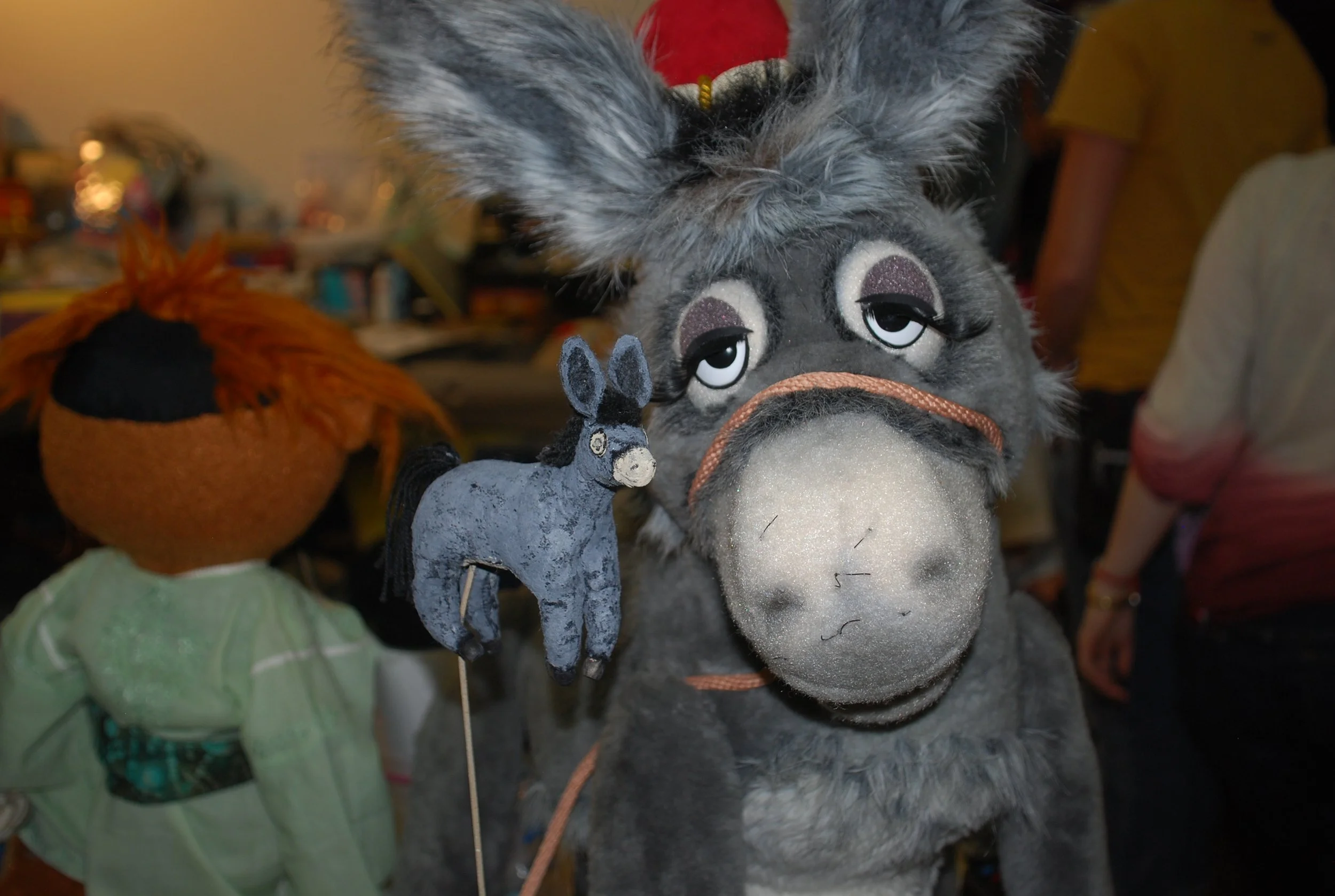
After leaving their village where conflict broke out, little Sara sees demons in shadows everywhere. She hides herself away, while her brother Wassam fights with his cousins and other children in the town where they now find themselves. War has taken away so much they knew and loved. The children's aunt despairs, until a strange traveller arrives in the town with a donkey and some shadow puppets. Wassam is able to use these puppets to tell his story, and both he and Sara make the breakthrough that has until now seemed impossible.
Out of the Shadows accompanies our Peace programme, Red Top, Blue Top, and has been shown to many thousands of children in the Middle East who have grown up surrounded by conflict and displacement. It was recently introduced as part of our PSS work for refugee Sudanese children in southern Egypt.
-
![]()
Rohingya children recreate parts of The Butterfly story through shadow puppetry.
-
![]()
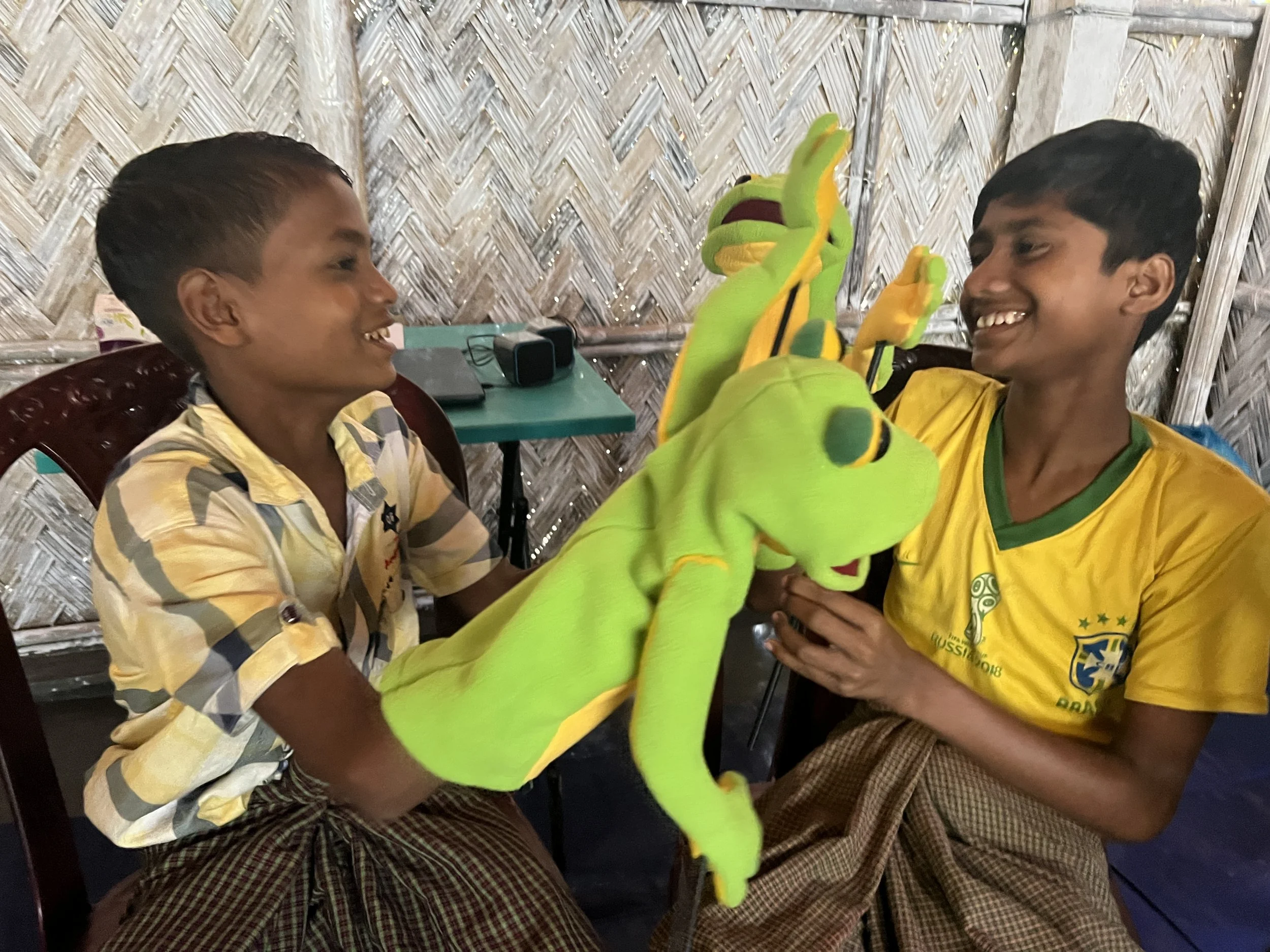
Rohingya girl and corner frog puppet.
-
![]()
“I am so worried about my daughter Noori.”
-
![]()
Little girl with butterfly shadow puppet.
-
![]()
Kite flying scene. Popular in the hillier parts of Kutapalong camp.
-
![]()
Facilitator traps a ‘butterfly’ in a bottle at a No Strings International training.


THE MAGIC HEART: CLIP
Psychosocial Support, Haiti
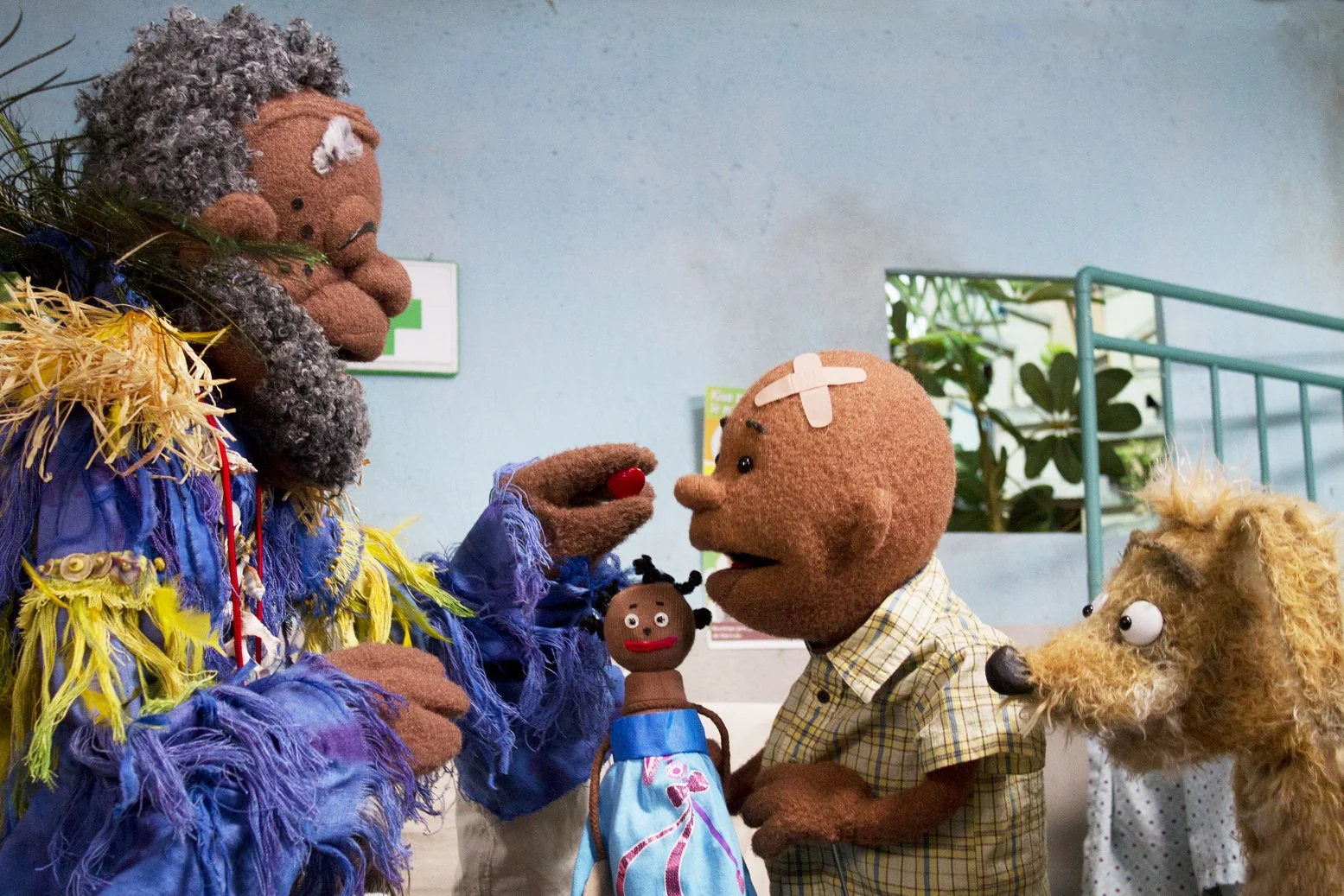
Jacques is persuaded to make a doll for his little sister Antoinette, who has become increasingly withdrawn after the terrible earthquake that struck their city. The doll has a little plastic heart which Jacques is told will make it come to life, and in giving the doll a voice he is finally able to find a way to meaningfully connect with Antoinette. When the heart is lost, Jacques panics, but then he learns that its magic lay within him all along and through helping, he and his sister are able to turn what had previously seemed a huge, insurmountable corner.
Studies in Haiti found that children were more able to talk about their hopes and fears, and form better friendships, after taking part in the PSS programme.
-
![]()
Retelling the emotionally charged Little Frog Story with shadow puppets.
-
![]()
The ancient tree in Jamir’s story.
-
![]()
High five with corner frog puppets.
-
![]()
Sharing skills with little ones.
-
![]()
Out and about with puppet Sowmmo.
-
![]()
Rohingya care-giver session.




THE BUTTERFLY: CLIP
Psychosocial Support, Rohingya / Bangladesh
Noori is transfixed when a butterfly enters her shelter. It brings a rush of colour and beauty, and with it a sense of something lost. Noori's brother traps the butterfly in a bottle and as Noori watches, both she and the little butterfly seem to fade away. Noori has not been able to leave her shelter since she turned 14. As such she is typical of many young Rohingya girls. Life in the camp can be dangerous, and her parents worry about her future. How can Noori maintain her hopefulness and resilience, and how can her family best support her?
The Butterfly and The Corner Frog, made in different styles from most of our films, support older children and adolescent Rohingya boys and girls living in Bangladesh.
-
![]()
Little Sara sees terrifying things in ordinary shadows.
-
![]()
The programme supports conflict-affected children of different ages.
-
![]()
On set, and the donkey character, Out of the Shadows.
-
![]()
Wassam and Sara, original puppet sketch design by Micheal Frith.
-
![]()
Sara spends much of her time hiding under the table.




THE CORNER FROG: CLIP
Psychosocial Support, Rohingya / Bangladesh
The Corner Frog in our story is a wise character who sees into the heart of the film’s troubled protagonist. When Jamir plays chinlone (a kind of local volleyball) with his friends, he deliberately loses the ball. Jamir has lost a lot, the Corner Frog remarks. But what? Jamir refuses to elaborate. He is angry with his friends, and with his younger brothers and sisters. By encouraging him to tell a story to his siblings, the Corner Frog steers Jamir to the place where all his sadness lies, and in confronting the day his father disappeared as his family and friends listen on, he is finally able to find release.
The Corner Frog is a coming-of-age story that helps us to value the importance of sharing our feelings, of listening, of awareness of our feelings and vulnerabilities, and helping those in need. It accompanies The Butterfly programme for older children and adolescents in the Rohingya camps.
-
![]()
Identifying and expressing feelings through puppets, like Jacques in our film.
-
![]()
Magic Heart dolls made by children in Haiti.
-
![]()
“The magic was in you, Jacques, all along.”
-
![]()
Puppet making, Haiti.



FIND OUT MORE
OUR STORY
How an old puppet called Seamus led to an international creative collaboration
OUR PUPPETRY
Why puppets create space for difficult conversations and behaviour change
OUR FILMS
Developed with leading members of the original Muppet Show creative team
OUR TEAM
The artists, trainers, and trustees behind the work
OUR METHODOLOGY
The No Strings Method: how film, puppetry and participation come together